Showing posts with label Resisting Temptation. Show all posts

Tuesday, August 25, 2015

No Regrets

10 Things You Will Never Regret As A Christian by Jarrid Wilson:
A life modeled after Jesus is hands down the greatest life one could ever live. And while a life apart from Christ may be filled with many toils and regrets, there are many things you will never regret doing when it comes to life as a Christian.

1. Praying. (1 Thessalonians 5:17)
Prayer brings is closer to God, his love and his sovereignty. When we pray, we are in direct communication with the one who created us. Praying may not always be easy, but it’s something that’s always worth it.
2. Giving your life to Christ. (Romans 12:1)
I cannot recall anyone who has ever regretted encountering the love, grace and almighty purpose of Jesus Christ in their life. It’s something this world cannot offer.
3. Reading Your Bible. (Psalms 119:105)
God’s Word is a life-source for the soul. And while we read the Bible to learn more about God, his direction and our purpose in life, God’s presence within our lives will continue to grow stronger.
4. Putting others before yourself. (Philippians 2:3)
Humility is key. No one in their right ming has ever regretted finding a sense of humility in their life. Seeking after Jesus will continuously chip away our pride, and in turn teach us to put our neighbors before ourselves, as well as think of ourselves less.
5. Loving your neighbor. (Mark 12:31)
We love because God first loved us. Jesus’ sacrifice on the cross is the definition of love itself, and our calling as Christ followers is to love our neighbors, no matter the circumstance. Many people have regretted ignoring their neighbors, but nobody has ever regretted loving them.
6. Extending grace. (Matthew 6:15)
None of us deserve God’s grace but he continues to showcase it anyways. We are broken, messed up and jacked up people, but because of grace we are free from the bondage of our past. Extending grace to others will free us just as much as we think it will bring them peace.
7. Allowing God to guide you/Having Faith. (Proverbs 3:6)
You won’t regret allowing God to guide you. Why? Because God’s plan in life is for you to embrace his will, trust his promises and fulfill the calling of The Great Commission. Following God’s guidance isn’t always easy, but it’s definitely always worth it.
8. Resisting temptation. (James 4:7)
Temptation will lead you down a path contrary to that of God himself. As Christians we are called to flee temptation, and instead pursue the path that Jesus has laid out before us. Temptation leads to sin, and sin always leads to regret.
9. Taking refuge in the arms of God. (Psalms 118:8)
God is our protector, comfort and shield in times of need. The arms of God are a refuge for those who need it, and relying on his strength is something you will never regret doing. Take comfort in the arms of God, and understand that there is no safer place to be.
10. Abstaining from sexual impurity. (1 Corinthians 6:18)
Purity paves the way to intimacy. And although our culture has turned sex and promiscuity into a hobby, God’s yearning for our lives in and out of marriage is sexual purity and abstinence from extramarital relations. Watching porn, sex before marriage, and engaging in relationships outside of one’s marriage are all things you will regret in the long run. Stay focused on God’s plan for your life.

Monday, April 27, 2015

Present Tense

God gives grace through Christ for past sin, But what about your (and my) present sin? Check out Sin in the Present Tense by Darryl Dash
When we talk about God’s grace, we often talk about grace for past sin. But what about sin in the present tense? Is there grace for that as well?


It’s an important question, because we need grace for present sin. “There do not seem to be any convincing verses in Scripture that teach that it is possible for anyone to be completely free of sin in this life,” writes Wayne Grudem inSystematic Theology. We need present grace for present sin, or else we’re in trouble.
However, we're often unprepared for how to deal with present-tense sin. We hide in shame and try to self-atone by feeling bad and beating ourselves up, rather than trusting in the finished work of Christ.
How do we deal with present-tense sin? Seven ideas:
One: We shouldn’t be surprised by present sin. As James notes, “We all stumble in many ways” (James 3:2). John writes that nobody should claim to be sinless (1 John 1:18). Sin will be part of our ongoing reality until our glorification.
Two: We shouldn’t accept present sin. Countless Scriptures tell us to strive for holiness and avoid evil (e.g. 2 Corinthians 7:1, Colossians 3:5). We can never make a truce with sin, despite the first point.
Three: We shouldn't get overly discouraged when we sin. While we shouldn't accept sin, neither should we wallow in guilt and shame. Instead, we should run to God's grace. Millard Erickson captures this well:
On the one hand…there need not be great feelings of discouragement, defeat, even despair and guilt, when we do sin. But on the other hand, it also means that we will not be overly pleased with ourselves nor indifferent to the presence of sin. (Christian Theology)
Four: We can be open about our sins and struggles with God. This is hard, because we're usually ashamed. I love what Jamin Goggin and Kyle Strobel write in Beloved Dust:
Everything that comes out of our hearts in the presence of the Lord is an invitation to be known by him. Whether it is fear, shame, pride, anxiety, or even lust, our call is to open those things before him and receive redemption as those who desperately need it.
Five: Confess sins (appropriately) in community. As Kent Hughes points out in his commentary on James 5:16, sin brings isolation. Confession destroys this autonomy, promotes humility, allows the free flow of grace in community, and allows us to bear each other’s burdens (Galatians 6:1).
Six: Confess sins corporately. As William Dyrness says, this is just confessing reality. It's why I love including corporate confession in our public worship. This can be one of the most beautiful parts of the service. Mike Cosper writes, “As Christians acknowledge their failures together, they testify to the world that the plausibility of the gospel is rooted not in their performance, but in the faithful mercy of God.”
Seven: Pray for daily forgiveness. It’s interesting that Jesus taught us to pray, “Give us this day our daily bread" and then "forgive us our debts…” (Matthew 6:11-12). Just as we need to pray for daily bread, we also need to pray for daily forgiveness. It's our daily prayer this side of the fullness of the Kingdom.
We sin in the present tense. We need God’s grace in the present tense. Believing the gospel means that we are free to acknowledge this reality, free to run to grace, and free to be real rather than posing and pretending.

Friday, December 19, 2014

Power of Beauty

The is a excerpt from God's Beauty for the Bored, Busy and Depressed by Tony Reinke
To escape our bondage to sin, we must come alive to the glory of God in Christ. He’s our only hope.
On this theme, theologian Jonathan Edwards was a master. He discovered God’s glory and beauty all over Scripture, and he centered his understanding of the Christian life there.
The classic picture of Edwards as a hellfire preacher, suspending sinners by fishing line over the pit of God’s flaming wrath, simply fails to get a balanced picture of his ministry. He may be most famous for scaring people out of hell with divine wrath, but he spent far more of his time trying to woo people into heaven by proclaiming the beauty of God in the gospel. So writes Dane Ortlund, in a new book destined to be a top book of 2014: Edwards on the Christian Life: Alive to the Beauty of God (Crossway).
This insatiable desire for God’s beauty stokes the fire of the Christian life. We ask for the same thing every day: “to gaze upon the beauty of the LORD” (Psalm 27:4). And we testify together: “all the gods of the peoples are worthless idols, but the LORD made the heavens. Splendor and majesty are before him; strength and beauty are in his sanctuary” (Psalm 96:5–6).
We must have God’s beauty.
So what does God’s splendor have to do with my daily life right now — in my busyness, in my temptations, in my boredom, and in my spiritual dryness? I recently sat down to talk with Dane Ortlund, who serves as the Bible publishing director at Crossway.
Beauty and Busyness
First, God’s beauty soothes our busy and anxious hearts. 
“The beauty of God’s tender mercy calms me down, lets me breathe again, slows my heart’s frantic scurrying about,” Dane said. “There is so much ambiguity in living as a moral being. In all my anxiety, he is an undeterred and gentle Father who has adopted and justified me. Edwards really felt that. Especially when you read his sermons or letters, there’s an aroma you smell. He really felt safe and loved and calmed because of God and his gentle care for him as a Father.”

Beauty and Temptation
Second, God’s beauty fills the affections of our heart, which is essential if we are going to meet our foes of sin and temptation with success. “The world tells me that selfish indulgence in lust is where the fun is,” Dane said. On the contrary, “Edwards writes all over the place about quietly enjoying the beauty of God, and communing with him in his Son, who is the mighty and radiant friend of sinners like me. To use a word Edwards delightfully used, enjoying God happifies us.”
One of the crucial battles of the Christian life is discovering the true ugliness of sin and exposing its destructiveness. “Sin is the enchanting allure of what is going to kill you,” Dane said. “I can’t help but jump into the water of sin and get slammed against the rocks of judgment and hell and death. I have no willpower to stop. I cannot stop myself. I need a higher loveliness, a more compelling beauty. I am only going to do what I love to do, and I will be that way forever. I cannot function any other way. I have a beauty-thirst that must be quenched, no matter what.”....

Read the rest at the link.

Monday, September 22, 2014

No Other King


O Lord,
Come quickly and reign on Your throne,
for now often something rises up within me,
and tries to take possession of Your throne;
pride, covetousness, uncleanness, and sloth
want to be my kings;
and then evil-speaking, anger, hatred,
and the whole train of vices join with me
in warring against myself,
and try to reign over me.

I resist them,
I cry out against them,
“I have no other king than Christ!”
O King of Peace,
come and reign in me,
for I will have no king but You!
Bernard of Clairvaux, 1090-1153


Monday, August 25, 2014

Noticing the Dirt

"I know all about the despair of overcoming chronic temptations.

It is not serious provided self-offended petulance, annoyance at breaking records, impatience etc doesn't get the upper hand. No amount of falls will really undo us if we keep on picking ourselves up each time. We shall of course be very muddy and tattered children by the time we reach home. But the bathrooms are all ready, the towels put out, and the clean clothes are airing in the cupboard.

The only fatal thing is to lose one's temper and give it up. It is when we notice the dirt that God is most present to us: it is the very sign of His presence."
--The Collected Letters of C. S. Lewis, Volume 2 (Cambridge University Press, 2004), letter to Mary Neylan, January 20, 1942  page 507; emphasis original

HT: Dane Ortlund

Thursday, October 10, 2013

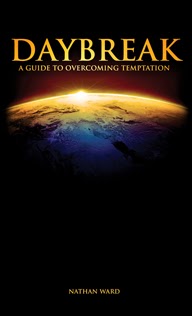
Daybreak: A Review

My review of Daybreak: A Guide to Overcoming Temptation, by Nathan Ward

Every Christian need a good little book on resisting temptation in their library. Every Christian counselor needs a good little book on wining over temptation to give to the people they are helping. This could be that little book.

I say "little," because there are only 108 pages; It can easily be read in one evening. However, you probably won't want to do that, because you will be thinking and meditating on how the material applies to your own struggles with sin. There is a lot packed into those 108 pages.

The title "Daybreak" comes from a curious "coincidence" in the story of Jacob in Genesis. As Jacob leaves Canaan on what ends up being a decades long exile, he comes to Bethel at sunset (Gen. 28:11), where he sees a vision of a stairway between heaven and earth. When he returns to Canaan, he spends a restless night and wrestles with an angel until sunrise (Gen 32:31). As Jacob surrenders to God, he sees the dawn -a daybreak. Ward says that the sunset and sunrise motif is not a coincidence, but rather a literary structure designed to frame the narrative. Sunset and sunrise are the bookends of Jacob's time of exile. Hidden in the very structure of the story is the message that times of testing and trial are periods of darkness, but once one surrenders to God (symbolized by the injured hip) daylight returns. Jacob won by losing, because his real struggle was with himself. Surrender to God brings the sunrise of victory. That little insight alone was to me worth the time I spent reading this book.

The book more than adequately covers all the basic material: (1) God's call to holiness and new life for believers, (2) the nature of our enemies (Satan and self), (3) haw to prepare before times of temptation, (4) how to resist sin in time of battle, and (5) what to do after the fight, win or lose. Every part is filled with Scripture. Every part is also very practical and applicable.

There are plenty of good books out there on temptation, holiness and spiritual victory. Most are far more exhaustive than this book. This may not be one of the best, but it is a good short work that is worth owning, reading and giving away.
_________________
Full Disclosure: I received the book free from Cross-Focused Reviews in exchange for giving an honest review. See my book review policy.